Science Fiction: A Very Short Introduction by David Seed
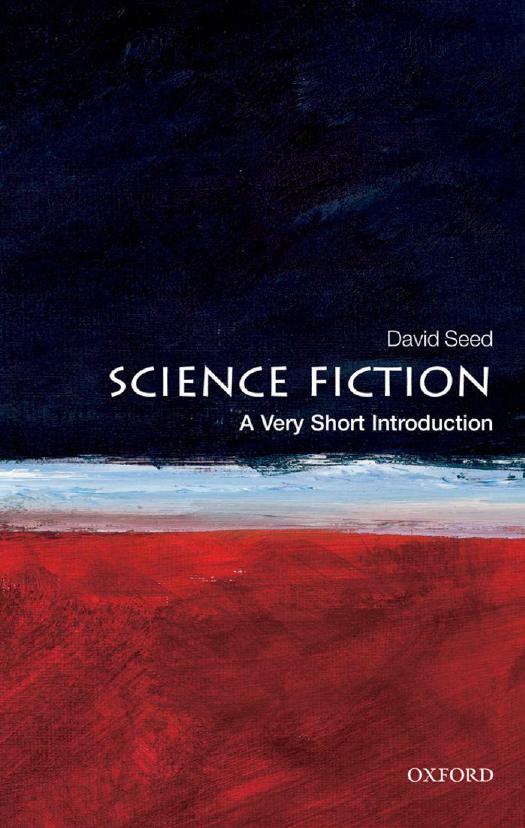
Author:David Seed [Seed, David]
Language: eng
Format: epub, pdf
ISBN: 9780199557455
Amazon: 0199557454
Publisher: Oxford University Press
Published: 2011-07-14T00:00:00+00:00
The golden age of utopias
From the late 19th century up to the outbreak of the First World War, over 200 utopias were published, the majority of which, with a few famous exceptions, are still unavailable to the general reader. The reasons for this surge in production must have included the rapid pace of technological change, the concentration in the USA of capital in a small number of private hands, and an intensifying debate about social justice. The strategies used to establish these narratives vary from work to work. Samuel Butler, for example, draws on the older tradition of territorial exploration to take his traveller into a world which bizarrely inverts many values of Victorian Britain. Erewhon (1872) describes a society in which it is a crime to fall ill and where machines have been abolished because humans feared they would take over. The Canadian James De Mille combines shipwreck with the found manuscript convention in his 1888 novel A Strange Manuscript Found in a Copper Cylinder, describing a world near the South Pole where gender equality has been achieved. Alfred D. Cridge takes us to another planet embodying the best of the Earth in Utopia (1884), whereas Henry Olerich presents his report on society through the eyes of a visitor from Mars in A Cityless and Countryless World (1893).
While the latter were celebratory, negative voices were heard. The American Anna Bowman Todd’s The Republic of the Future or, Socialism a Reality (1887) purports to be a series of letters from a Swedish nobleman visiting the USA in the 21st century. Although he is impressed by his speedy journey under the Atlantic by way of pneumatic subway, reservations begin to appear about automation when he stays for days in a New York hotel without meeting a soul. But the main thing to strike him is the physical flattening out of the city into the ‘very acme of dreariness’, a physical correlate of the political equality enjoyed in the republic. Monotony is the main theme of Dodd’s portrait, monotony of dress and monotony of life, since the state has taken over so many functions. This aroused no misgivings in the narrator of Edward Bellamy’s famous utopian novel.
Looking Backward, 2000–1887 (1888) was one of the most widely read utopias of the late 19th century. Its readership extended worldwide and an unintended tribute was paid when Czarist Russia banned the volume. Bellamy helped trigger the utopias of William Morris and H. G. Wells, and played an important part in the rise of the Nationalist movement in the USA, which was devoted to nationalizing industry. Bellamy’s volume also helped to popularize the ‘sleeper wakes’ convention of having the protagonist sink into a prolonged sleep long enough to take him into the utopian future. Bellamy uses Boston as his key location to demonstrate the coming of utopia in 2000. Julian West wakes to find a spacious, sanitized city of broad streets and open squares. Social conflict has disappeared, as has the profit motive, since all industry
Download
Science Fiction: A Very Short Introduction by David Seed.pdf
This site does not store any files on its server. We only index and link to content provided by other sites. Please contact the content providers to delete copyright contents if any and email us, we'll remove relevant links or contents immediately.
| Books & Reading | Comparative Literature |
| Criticism & Theory | Genres & Styles |
| Movements & Periods | Reference |
| Regional & Cultural | Women Authors |
4 3 2 1: A Novel by Paul Auster(12352)
The handmaid's tale by Margaret Atwood(7726)
Giovanni's Room by James Baldwin(7297)
Asking the Right Questions: A Guide to Critical Thinking by M. Neil Browne & Stuart M. Keeley(5734)
Big Magic: Creative Living Beyond Fear by Elizabeth Gilbert(5721)
Ego Is the Enemy by Ryan Holiday(5386)
The Body: A Guide for Occupants by Bill Bryson(5064)
On Writing A Memoir of the Craft by Stephen King(4909)
Ken Follett - World without end by Ken Follett(4703)
Adulting by Kelly Williams Brown(4549)
Bluets by Maggie Nelson(4533)
Eat That Frog! by Brian Tracy(4497)
Guilty Pleasures by Laurell K Hamilton(4417)
The Poetry of Pablo Neruda by Pablo Neruda(4078)
Alive: The Story of the Andes Survivors by Piers Paul Read(4009)
White Noise - A Novel by Don DeLillo(3987)
Fingerprints of the Gods by Graham Hancock(3974)
The Book of Joy by Dalai Lama(3958)
The Bookshop by Penelope Fitzgerald(3826)
